Suffolk County DWI Defense Attorney Jason Bassett Explains Interlock Device Bypass Charges Under NY VTL § 1198(7)(b)
Just another WordPress site
Press Release Disclaimer: This is a press release distributed through the XPR Media network. It has not been independently verified by our newsroom.
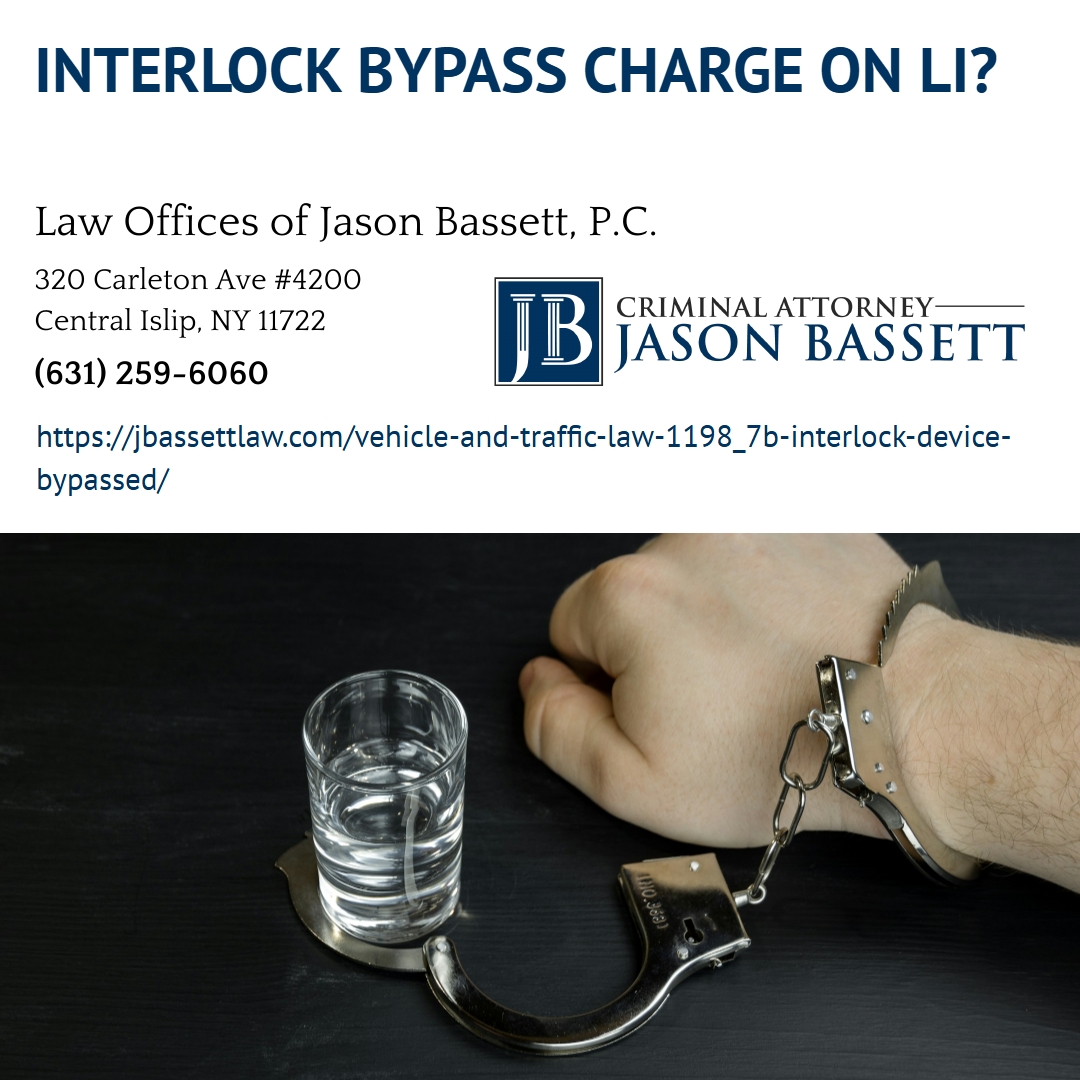

CENTRAL ISLIP, NY – September 14, 2026 – New York Vehicle and Traffic Law § 1198(7)(b) makes it a misdemeanor to knowingly rent, lease, or lend a motor vehicle to a driver whose privileges are restricted to vehicles equipped with an ignition interlock device, unless that vehicle has the device installed. Suffolk County DWI defense attorney Jason Bassett of the Law Offices of Jason Bassett, P.C. (https://jbassettlaw.com/vehicle-and-traffic-law-1198_7b-interlock-device-bypassed/) explains how the statute targets third parties, including family members, friends, employers, and rental agencies, and outlines the elements prosecutors must prove to obtain a conviction.
According to Suffolk County DWI defense attorney Jason Bassett, the statute is commonly described as an “interlock device bypass” law because it involves helping a restricted driver get around the IID requirement. The provision was enacted as part of the broader Leandra’s Law framework, which mandated ignition interlock installation for most DWI offenders. “The law places duties on both sides: the restricted driver must notify anyone who provides them a vehicle, and the person providing the vehicle must not knowingly rent, lease, or lend a non-equipped vehicle to a restricted driver,” Bassett explains.
Suffolk County DWI defense attorney Jason Bassett emphasizes that the word “knowingly” in the statute is critical. Under New York Penal Law § 15.05(2), a person acts knowingly when aware that the conduct or circumstance exists. Applied to VTL § 1198(7)(b), this means the prosecution must prove the person providing the vehicle was aware of the restriction. A person who lends a vehicle without knowing about the IID requirement has a stronger argument that the statute was not violated.
To secure a conviction, attorney Bassett notes, prosecutors must establish three elements beyond a reasonable doubt: that the defendant rented, leased, or lent a vehicle; that the defendant knew the driver was restricted to operating IID-equipped vehicles; and that the vehicle provided was not equipped with the required device. “The knowledge element is often the most contested part of these cases,” Bassett observes. “Prosecutors may try to prove it through the defendant’s presence in court when the restriction was imposed, communications referencing the requirement, or evidence that the defendant saw a license carrying the interlock notation.”
Penalties under VTL § 1801 escalate with repeat violations within an 18-month period. A first offense carries a maximum fine of $300 and up to 30 days in jail. A second offense within 18 months increases the exposure to a $525 fine and up to 90 days in jail, while a third offense within that window carries a $1,125 fine and up to 180 days in jail. A misdemeanor conviction also creates a permanent criminal record and may carry collateral consequences affecting employment, professional licensing, insurance, or probation status.
The firm handles VTL § 1198(7)(b) cases in Suffolk County District Court and in local town and village justice courts across Long Island. Attorney Bassett advises that several defenses may apply, including lack of knowledge about the driver’s restriction, the absence of an actual lending arrangement (such as when a vehicle is taken without permission), and mistake of fact regarding whether the vehicle was equipped with a functioning interlock device.
“Family members and friends are the most commonly charged parties under this statute,” Bassett points out. “What may seem like a routine favor, such as letting a relative borrow a car, can turn into a misdemeanor case with serious consequences if the lender knew about the IID restriction.” A restricted driver who operates a non-equipped vehicle may also face a separate Class A misdemeanor charge under VTL § 1198(9)(d).
For those charged under VTL § 1198(7)(b) in Suffolk County, preserving text messages, emails, and other communications that bear on the knowledge element can be valuable. Contacting an experienced DWI defense attorney early in the case may help evaluate whether the prosecution can actually prove each statutory element beyond a reasonable doubt.
About Law Offices of Jason Bassett, P.C.:
Law Offices of Jason Bassett, P.C. is a Central Islip-based law firm focused on criminal defense and DWI matters. Led by attorney Jason Bassett, a former Assistant District Attorney in Queens County and former Special Assistant Attorney General, the firm represents clients throughout Suffolk County and Long Island. The office is located at 320 Carleton Avenue, Suite 4200, Central Islip, NY 11722. For consultations, call (631) 259-6060.
Embeds:
Youtube Video: https://www.youtube.com/watch?v=yYpgN0PVRlA
GMB: https://www.google.com/maps?cid=695024758410642184
Email and website
Email: bassettlaw@live.com
Website: https://jbassettlaw.com/
Media Contact
Company Name: Law Offices of Jason Bassett, P.C.
Contact Person: Jason Bassett
Email: Send Email
Phone: (631) 259-6060
Address:320 Carleton Ave # 4200
City: Central Islip
State: New York 11722
Country: United States
Website: https://jbassettlaw.com/
Press Release Distributed by ABNewswire.com
To view the original version on ABNewswire visit: Suffolk County DWI Defense Attorney Jason Bassett Explains Interlock Device Bypass Charges Under NY VTL § 1198(7)(b)