
Johnson Auto Body Explains How Collision Damage Can Affect Modern Vehicle Safety Systems
Knightdale, NC - November 18, 2026 - PRESSADVANTAGE - Johnson Auto Body Inc., an independent collision repair facility
Press Release Disclaimer: This is a press release distributed through the XPR Media network. It has not been independently verified by our newsroom.
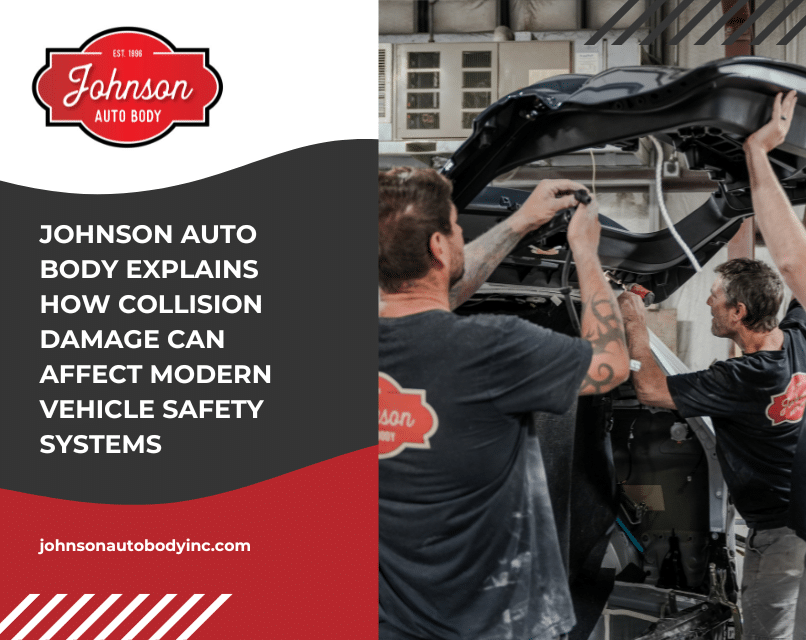

Knightdale, NC – November 18, 2026 – PRESSADVANTAGE –
Johnson Auto Body Inc., an independent collision repair facility in Knightdale, North Carolina, is sharing November consumer guidance explaining how vehicle collisions can affect modern safety systems beyond visible exterior damage. The guidance focuses on Advanced Driver Assistance Systems (ADAS), occupant restraints, structural components, and the inspections that may be necessary before a repaired vehicle returns to the road.
As newer vehicles incorporate cameras, radar sensors, electronic control modules, and specialized structural materials, collision repairs increasingly require attention to components that may not show obvious signs of damage. Johnson Auto Body’s guidance helps drivers understand which systems may require evaluation and what questions to ask their repair facility following an accident.
The company identifies three important areas of concern: electronic driver assistance technologies, occupant protection equipment, and structural components. Each contributes to vehicle safety in a different way, and the appropriate inspection or repair procedures depend on the vehicle’s design and the damage involved.
Advanced Driver Assistance Systems are one of the primary considerations following a collision. Features such as automatic emergency braking, adaptive cruise control, lane departure warning, and blind spot monitoring rely on cameras, radar sensors, and other electronic components. Depending on the vehicle, these devices may be positioned behind windshields, within bumper assemblies, or near exterior mirrors.
An accident can affect sensor mounting locations even when the electronic components themselves appear undamaged. Changes in position or alignment may influence how the systems detect surrounding vehicles, road markings, or obstacles. As a result, certain repairs may require diagnostic scanning, component inspection, or calibration according to manufacturer instructions.
Johnson Auto Body performs pre-repair and post-repair diagnostic scanning using professional equipment. When specialized ADAS calibration or other mechanical procedures are required, the company coordinates those operations with qualified service partners. These procedures are determined by the vehicle’s specifications and the repairs performed rather than automatically applied to every collision.
Through its collision repair services, Johnson Auto Body addresses accident-related damage using documented assessments and repair planning. The company emphasizes that restoring exterior appearance does not independently establish whether all affected electronic systems have been evaluated.
Occupant protection systems represent another important consideration. Airbags, seatbelt pretensioners, impact sensors, and associated electronic modules are designed to respond to specific collision conditions. Depending on the accident, manufacturers may require inspection or replacement of certain components even when airbags have not deployed.
For example, a collision may affect seatbelt assemblies, restraint-system wiring, or related sensors without producing immediately visible damage inside the passenger compartment. Applicable manufacturer procedures help determine which components require evaluation and whether replacement is necessary.
Vehicle structures also play an important role in occupant protection. Modern vehicles incorporate reinforced areas and energy-management structures designed to influence how collision forces are distributed. Damage involving structural rails, pillars, mounting points, or other critical components may require specialized repair methods and measurements.
Manufacturers establish restrictions for repairing certain materials, including high-strength steel, ultra-high-strength steel, and aluminum. Depending on the component, these instructions may limit straightening, heating, sectioning, or particular joining methods. Repair decisions must therefore reflect the vehicle’s construction and the documented condition of the affected area.
Johnson Auto Body uses structural repair and measuring equipment when appropriate to evaluate collision-related conditions. These procedures can help technicians identify alignment concerns and assess whether affected reference points meet applicable specifications.
The November guidance also addresses vehicle stability and control systems. Electronic stability control, steering systems, suspension components, and wheel-alignment-related equipment can be affected by collisions involving wheels or underbody areas. Changes in vehicle handling, unusual vibrations, or warning lights may indicate that further evaluation is necessary.
These conditions do not automatically establish electronic or structural damage. However, they provide useful information for technicians when considered alongside the collision location and other inspection findings.
For consumers, an important distinction involves diagnostic scanning and ADAS calibration. Diagnostic scanning retrieves information about electronic system conditions, including certain stored fault codes. Calibration is a separate procedure used to establish or verify camera or sensor operating parameters according to manufacturer requirements.
A completed diagnostic scan does not automatically confirm that every required calibration has been performed. Likewise, the absence of dashboard warning lights does not independently establish that all safety-related components are functioning according to manufacturer specifications.
Johnson Auto Body encourages vehicle owners to ask whether their repairs require additional diagnostic procedures, electronic system inspections, or calibration. Drivers should also understand whether these operations are performed by the repair facility or coordinated with specialized service providers.
Manufacturer repair information remains central to these decisions. Inspection and calibration requirements can vary significantly by vehicle make, model, model year, and the components affected during an accident. A procedure required for one vehicle may not apply to another, even when the visible damage appears similar.
Johnson Auto Body provides information about its repair approach, equipment, and technician development through its company information page. The company emphasizes manufacturer-informed repair planning and coordination of specialized operations when necessary.
The November consumer guidance recommends that drivers ask three questions after a collision: Which safety-related components were affected or required inspection? Were applicable manufacturer procedures followed? What diagnostic, calibration, or final inspection records are available?
These questions can help vehicle owners understand why certain repair operations may be necessary even when the damaged exterior appears relatively minor. They can also provide a clearer explanation of the work completed before the vehicle is returned.
For Knightdale and surrounding Wake County drivers, the central message is that modern collision repair involves more than restoring body panels and paint. Electronic driver assistance systems, occupant restraints, and structural components may all require consideration depending on the impact and vehicle design.
Johnson Auto Body’s November guidance is intended to help consumers recognize the importance of appropriate post-collision evaluations and manufacturer-specific repair requirements. The company continues serving drivers in Knightdale, Raleigh, Wendell, and surrounding communities through its Knightdale collision repair facility.
About Johnson Auto Body Inc.
Johnson Auto Body Inc. is an independent collision repair facility established in 1996 and located at 821 H & R Drive, Knightdale, NC 27545. The company provides collision repair, auto body repair, structural restoration, automotive refinishing, and related vehicle restoration services. Johnson Auto Body emphasizes professional technician development, documented repair planning, insurance coordination, and customer communication throughout the collision repair process.
###
For more information about Johnson Auto Body Inc, contact the company here:
Johnson Auto Body Inc
Todd McGee
(919) 217-2887
todd@johnsonautobodyinc.com
821 H and R Dr, Knightdale, NC 27545
