Using credit cards to pay rent: What new survey data shows
Accredited Debt Relief reports that a survey reveals 33% of Americans with significant debt are using credit cards to
Press Release Disclaimer: This is a press release distributed through the XPR Media network. It has not been independently verified by our newsroom.

shinshila // Shutterstock
Housing is typically thought of as a fixed, non-negotiable bill, the one expense that gets paid before anything else. New survey data suggests that for a meaningful share of Americans, it isn’t being paid outright at all. It’s being financed.
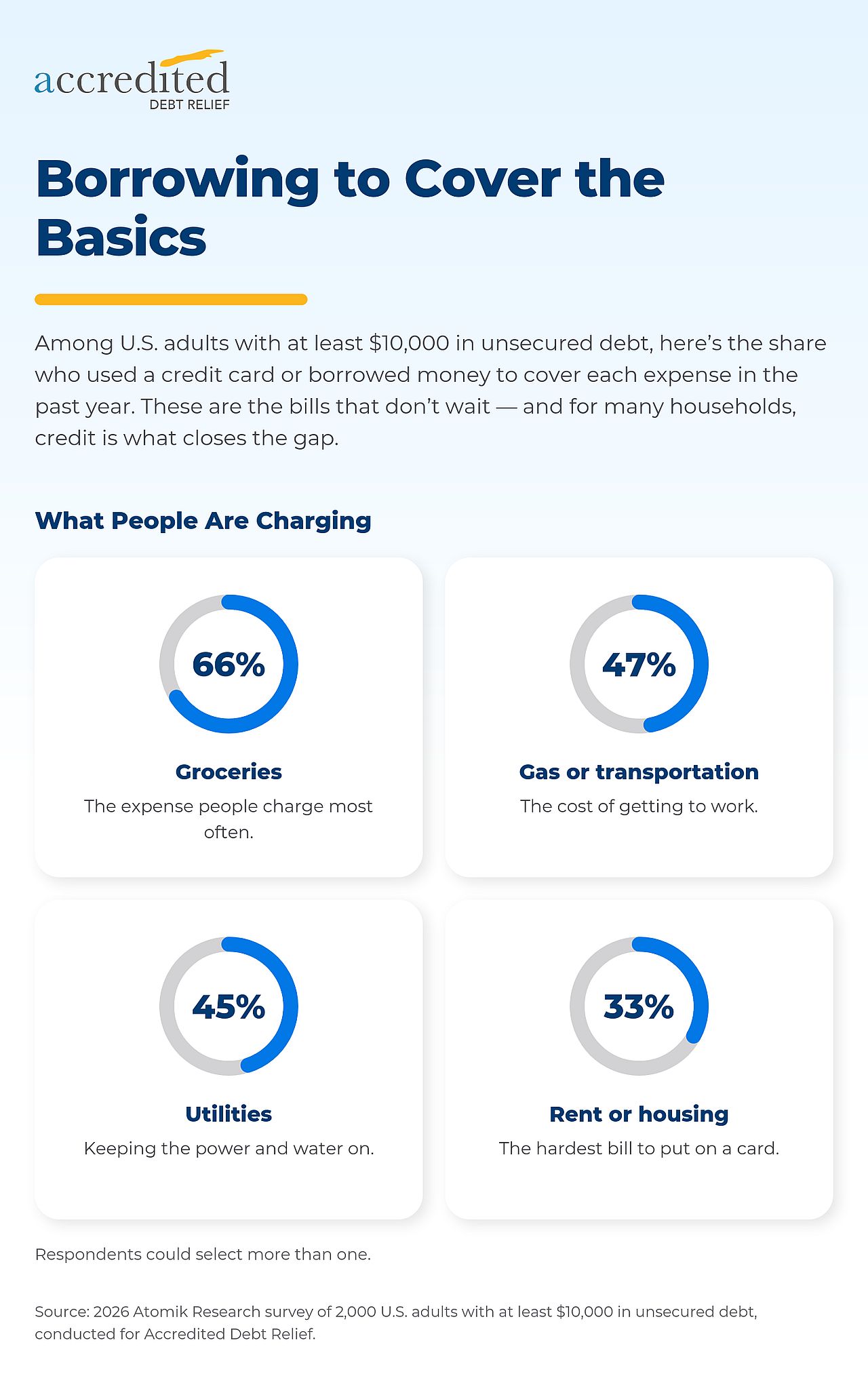
In a 2026 survey of 2,000 U.S. adults with at least $10,000 in unsecured debt, conducted by Atomik Research for Accredited Debt Relief, 33% said they had used a credit card or borrowed money to cover rent or housing costs in the past year.
Housing Joins the List of Bills Going on Credit
Housing is one of several essential expenses now being covered with credit. Groceries led at 66%, followed by gas or transportation at 47% and utilities at 45%. At roughly 1 in 3, rent or housing costs sit alongside them.
The discretionary spending isn’t what’s going on the card. Asked separately what they’d put on hold because of their debt, respondents named taking a vacation more often than anything else, at 41%, followed by building savings at 40%. The trips are being cancelled. It’s the groceries and the housing payments that are being financed.
Accredited Debt Relief
Why Charging Housing Is Different
Most landlords and mortgage servicers don’t accept credit cards directly, so people who pay this way typically go through a third-party platform that charges a processing fee. Others take a cash advance, which usually carries a higher interest rate than regular purchases and starts accruing interest immediately.
Either route makes the payment cost more than the number on the lease. And because housing is a large and recurring cost, a balance built this way grows faster than one built from occasional purchases.
Debt Payments Are Competing With the Bills
Asked what they’d done in the past 12 months in order to make a debt payment, respondents in Accredited Debt Relief’s Debt Impact Survey, conducted by Drive Research, described cutting into essentials: 45% had cut back on groceries or household essentials, 25% had skipped or delayed a utility payment and 16% had skipped or delayed rent or mortgage.
That reverses the usual framing. It isn’t only that everyday costs create debt. Existing debt payments are also displacing everyday costs, including the ones people protect most carefully. Nearly half, 49%, said they’re living paycheck to paycheck because of their debt payments, and 31% are making minimum payments without seeing the balance move.
What It Means When Housing Goes on Credit
There’s a long-standing principle in household budgeting that rent eats first. Housing is fixed, it’s essential, and the consequences of missing it are severe, so it gets paid before groceries, before savings, before anything discretionary.
That principle hasn’t gone anywhere. What’s changed is where the money comes from. When a household covers housing with credit, rent is still eating first, but it’s eating money the household doesn’t have yet.
Individual circumstances vary, and a survey can’t account for all of them. But housing is the expense people protect most carefully, so reaching for credit to cover it suggests income alone isn’t stretching far enough to meet basic costs for an increasing number of people.
This story was produced by Accredited Debt Relief and reviewed and distributed by Stacker.